3
Simulation · this attack has not happened
What If North Korea Nuked Hawaii?
Hawaii has read these words before. In January 2018 they were sent by mistake, and the correction took thirty-eight minutes. So this morning, people wait for the correction.

- to correct the false alert of January 2018
- 38 MIN
- from the alert to the burst, in the film
- 21 MIN
- one published estimate of North Korea’s 2017 test
- 250 KT
- mornings, on the test record, that one gets through
- 1 IN 13
- killed, if one in ten was outdoors
- 91,300
Compare the two mornings
Thirty-eight minutes to say it was a mistake. Twenty-one to get inside.
13 January 2018 Real history
The film’s morning Simulation
2018Phones across Hawaii: the alert, sent by mistake
The filmPhones across Oahu: the same alert. This time it is real
If the message ever comes, don’t wait for the correction.
Put yourself on the island
Where are you when the phone sounds?
- 1 psi · windows
- 2 psi · houses wrecked
- 5 psi · most buildings
- 12 psi · almost no one survives
The airport · 4.1 km · 5.6 psi · shock at 9 s
Its runways are shared with the Air Force base beside it.
Move one number
Sixty thousand lives turn on who was outdoors.
How many were outdoors, in sight of the flash
Killed · the film: a working morning, 21 minutes after an alert
91,300
64,800 by blast, and 26,500 by burns
Between the best case and the worst there are more than sixty thousand lives. All of them are people caught in the open.
Not in any of these counts: the people in uniform at work on the base. The census files behind the count don’t record them.
Count what the island has
The nearest burn centre is an ocean away.
36
Stretchers on one C-17
- The first nightFires around the harbour keep burning
- ThenThe power plant on the harbour’s shore, 4.8 km from the burst, fails. Honolulu goes dark
- ThenEvery pump in the water system runs on electricity
- Day 7Ships are unloading. The count of the dead is not finished
The shield, and the decision
Three is a small number.
- First warheadDestroyedG01: missG02: missG03: hitG04: already in flight
- Second warheadDestroyedG05: missG06: missG07: hitG08: already in flight
- Third warheadBursts over Pearl HarborG09: missG10: missG11: missG12: miss
Filled: hit · ringed: miss · faint: already in flight when the warhead was hit
By the test record, 12 hits in 20, one of three warheads gets through about one morning in 13.4. Thirty-two interceptors are left. Against the seven missiles North Korea is thought to hold back, the same arithmetic gives about one chance in 6 that another American city is hit.
Which would you order?
The hardware, item by item
What flew, and what stayed tied up.
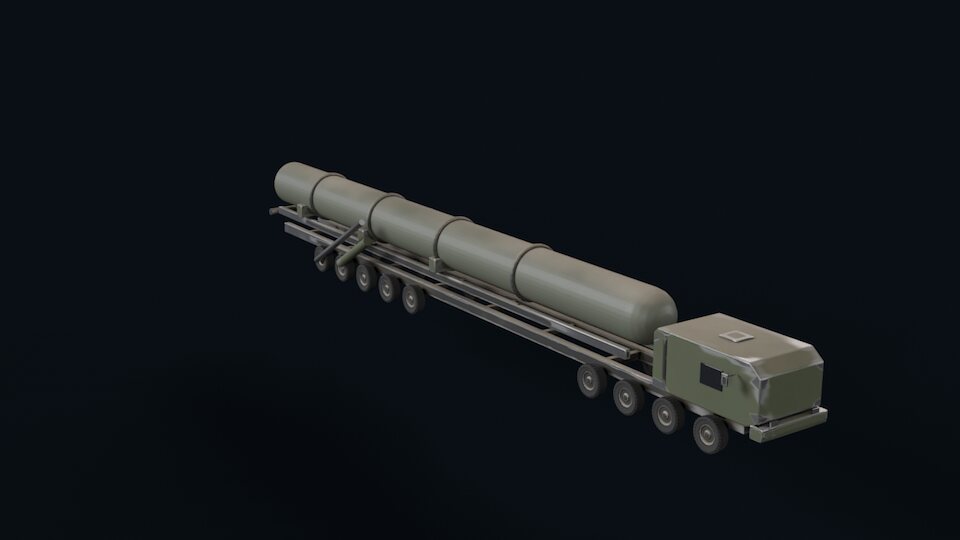
North Korea · Intercontinental ballistic missile
Hwasong-18
| Fuel | Solid: no refuelling before launch |
|---|---|
| Stated range | More than 15,000 km |
| Payload | One warhead, weight unknown |
| How many | “10 or fewer” ICBMs deployed, by a US intelligence estimate |
| Warhead in the film | 250 kt, the 2017 test’s |
| Flight in the film | 7,400 km in 28 minutes |
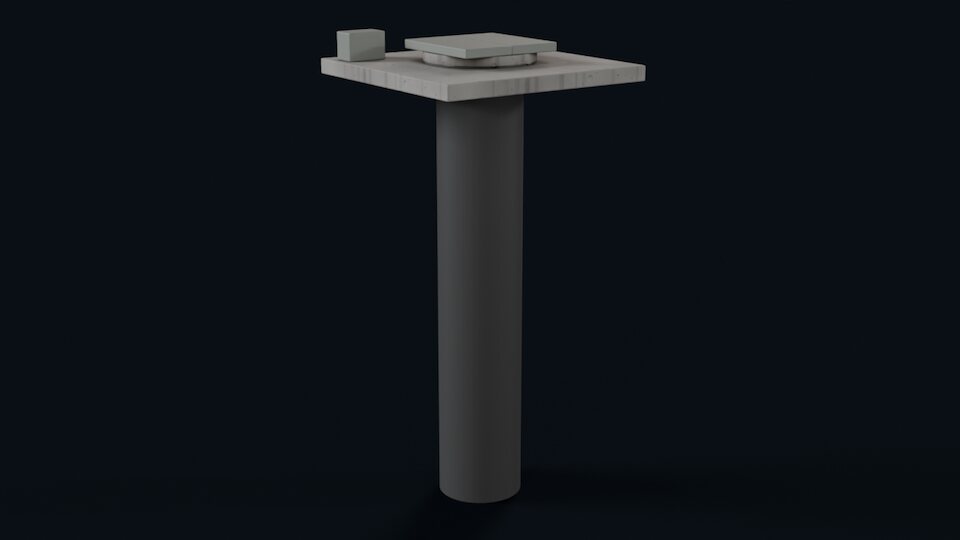
United States · Homeland missile defence
Ground-Based Interceptor
| Emplaced | 44 |
|---|---|
| Where | 40 in Alaska, 4 in California |
| Test record to December 2018 | 10 intercepts in 18 attempts since 1999 |
| March 2019 | An intercept, by a two-interceptor salvo |
| December 2023 | An intercept |
| Per warhead | Probably 3 to 4, one analyst says |
| Against a salvo of missiles | Never tested |
| In the film | 12 fired, 2 hit |
Tests are scripted, one target at a time.
Everything on the Ground-Based Interceptor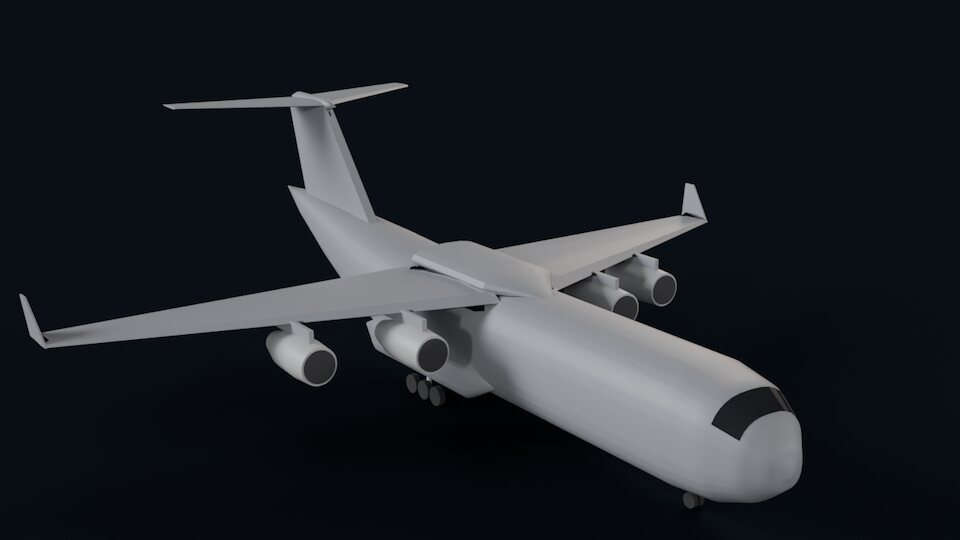
United States · Transport aircraft
C-17 Globemaster III
| Patients | 36 on stretchers and 54 walking, with attendants |
|---|---|
| To California | Five hours |
| Runways | 4 km from the burst |
Sources
Check us.
- 1
Federal Communications Commission, April 2018
The alert’s words; 38 minutes to the correction
Read 26 November 2026
- 2
Primary sourceKorean Central News Agency, Law on DPRK’s policy on nuclear forces promulgated (archived copy)
KCNA, via the Internet Archive, 9 September 2022
“Automatically and immediately”
Read 26 November 2026
- 3
Published estimateMissile Defense Project, Hwasong-18
Center for Strategic and International Studies, 13 January 2026
The missile: solid fuel, on a truck; its longest test
Read 26 November 2026
- 4
Published estimateNORSAR, The nuclear explosion in North Korea on 3 September 2017: a revised magnitude assessment (archived)
NORSAR, 12 September 2017
North Korea’s 2017 test: about 250 kilotons
Read 26 November 2026
- 5
Secondary sourceVann H. Van Diepen, Does North Korea really have so few ICBMs? (on the Defense Intelligence Agency’s “10 or fewer”)
38 North, July 2025
A US intelligence estimate: “10 or fewer” ICBMs
Read 26 November 2026
- 6
Primary sourceMissile Defense Agency, Ground-based Midcourse Defense
US Department of Defense, 2025
44 interceptors emplaced
Read 26 November 2026
- 7
Secondary sourceCenter for Arms Control and Non-Proliferation, Fact sheet: U.S. ballistic missile defense
Center for Arms Control and Non-Proliferation, 2025
40 interceptors in Alaska, 4 in California
Read 26 November 2026
- 8
Secondary sourceAnkit Panda, interviewed by Radio Free Asia, Interview on North Korea’s nuclear capabilities
Radio Free Asia, 3 March 2025
“Probably … 3 to 4 interceptors” for each warhead
Read 26 November 2026
- 9
Primary sourceMissile Defense Agency, Ballistic Missile Defense Intercept Flight Test Record (as of December 2018)
US Department of Defense, 17 January 2019
The test record to 2018: 10 intercepts in 18 attempts
Read 26 November 2026
- 10
Primary sourceMissile Defense Agency, U.S. Missile Defense Agency and U.S. Air Force test (FTG-11): the first two-interceptor salvo
US Department of Defense, 25 March 2019
The 2019 test: an intercept
Read 26 November 2026
- 11
Primary sourceMissile Defense Agency, Missile Defense Agency conducts successful intercept test (FTG-12)
US Department of Defense, 11 December 2023
The 2023 test: an intercept
Read 26 November 2026
- 12
Primary sourceAmerican Physical Society, Strategic ballistic missile defense: challenges to defending the United States
American Physical Society, Panel on Public Affairs, February 2025
Never tested against a salvo of attacking missiles
Read 26 November 2026
- 13
Primary sourceUS Congress, Office of Technology Assessment, The Effects of Nuclear War (Figure 1: vulnerability of population)
US Government Printing Office, May 1979
The casualty rates; who is outdoors, from 1 to 25 in 100
Read 26 November 2026
- 14
Real dataEuropean Commission, Joint Research Centre, GHS-POP R2023A: global human settlement population grid
Copernicus Emergency Management Service, 2023
Who lives where
Read 26 November 2026
- 15
Real dataUS Census Bureau, LEHD Origin-Destination Employment Statistics (LODES)
US Census Bureau, 2025
Who works where on a working morning
Read 26 November 2026
- 16
Real dataHawaii State Department of Health, Hawaii Trauma System Plan, 2020 (published 2021)
State of Hawaii, 21 May 2021
The state’s burn beds
Read 26 November 2026
- 17
Primary sourceUS Air Force, C-17 Globemaster III fact sheet
US Air Force, 2024
What a C-17 carries
Read 26 November 2026
- 18
Primary sourceFederal Emergency Management Agency, Radiation emergencies (nuclear explosion): get inside, stay inside, stay tuned
Ready.gov, 2026
“Get inside, stay inside and stay tuned”
Read 26 November 2026
After the false alarm, Hawaii stopped its missile drills, and took the attack-warning tone out of its monthly siren test.
If the message ever comes, don’t wait for the correction.