62
Simulation · this attack has not happened
What If North Korea Nuked Los Angeles?
Four missiles, twenty interceptors, thirty-three minutes. On the film’s odds, a morning like this one comes about once in four hundred. This is the morning.
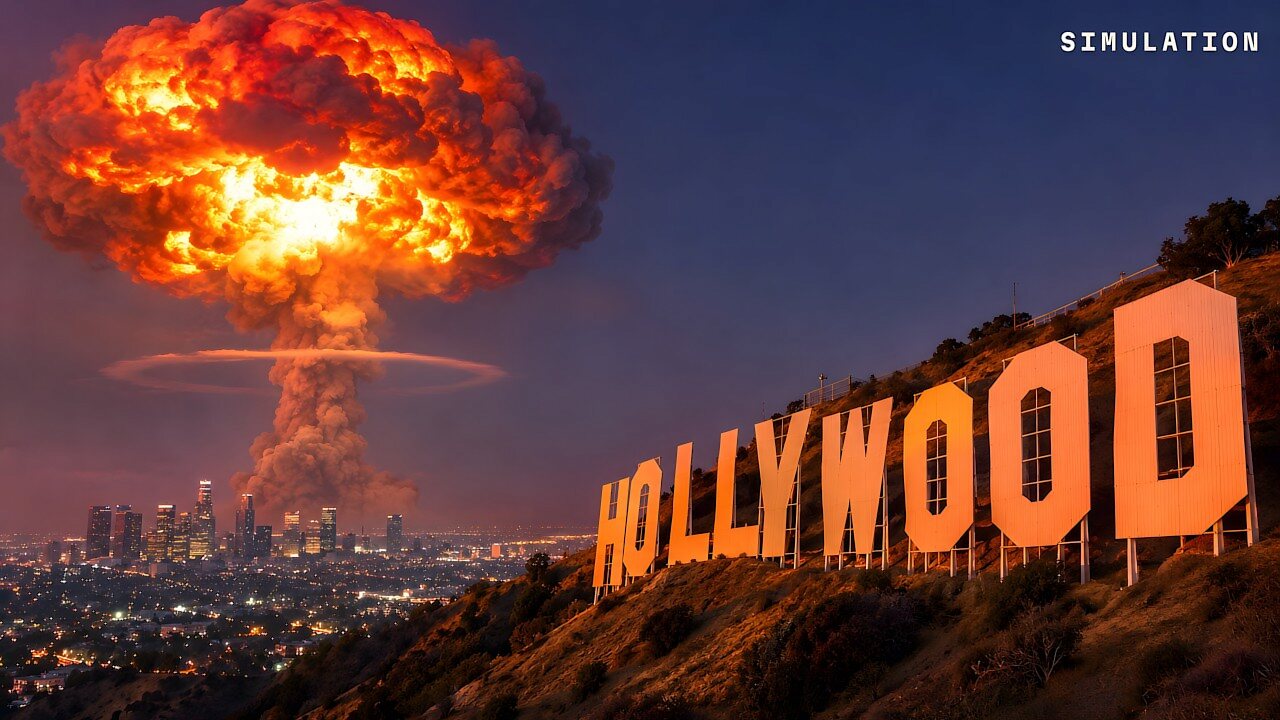
- Hwasong-18 missiles, launched twenty seconds apart
- 4
- interceptors fired; three hit
- 20
- from Sinpung-dong to the burst over City Hall
- 33 MIN
- the warhead, inside the published range
- 250 KT
- killed on a working morning, if one in ten was outdoors
- 670,200
Follow the warhead
Thirty-three minutes over the North Pacific.
T−33:41 · Four launches from Sinpung-dong, twenty seconds apart
- T−33:41Four launches from Sinpung-dong, twenty seconds apart
- T−26:41Sixteen interceptors leave Fort Greely, Alaska
- T−25:41Every phone in the county: an incoming missile
- T−14:06Three warheads destroyed in 45 seconds
- T−12:51All four interceptors miss the last one
- T−5:41Vandenberg’s four miss too
- T−0:35Re-entry, at twenty times the speed of sound
- 10:00250 kilotons, 1,903 metres above City Hall
Fire the interceptors
Once in four hundred mornings.
- First warheadDestroyedG01: missG02: hitG03: already in flightG04: already in flight
- Second warheadDestroyedG05: hitG06: already in flightG07: already in flightG08: already in flight
- Third warheadDestroyedG09: missG10: missG11: hitG12: already in flight
- Fourth warheadBursts over the cityG13: missG14: missG15: missG16: missV01: missV02: missV03: missV04: miss
Filled: hit · ringed: miss · faint: already in flight when the warhead was hit · G = Fort Greely · V = Vandenberg
Interceptors for each warhead
At four each, the film’s first salvo: a warhead gets through about 1 in 10.1 mornings.
By the interceptors’ own test record, a morning like this comes about once in four hundred. This is the morning.
Walk out from City Hall
How far is far enough?
5.8 km from City Hall: 2 psi. Wooden houses are badly damaged. The shock arrives 13.3 s after the flash. Anyone outdoors in sight of the fireball is burned to the third degree before it arrives. Things that can catch fire here: dry rotted wood, newspaper, fine dry grass, a cotton window shade, plywood (flaming while lit).
Move the biggest unknown
Six hundred and seventy thousand, if one in ten was outdoors.
How many were outdoors, in sight of the flash
The 1979 congressional study ranges from a winter night to a summer weekend
How big the warhead is
Published estimates of North Korea’s largest test run from about 100 to 400 kilotons
Killed, at 250 kt
670,200
and 884,900 injured
400
Air-raid sirens the county once tested
10 million
Residents alerted by mistake, January 2025
The decision
Six missiles left. Three doors.
Any nuclear attack by the DPRK against the United States or its allies is unacceptable and will result in the end of that regime.
Which door would you open?
The hardware, item by item
The missile, the silo, and the thing that has to hit it.
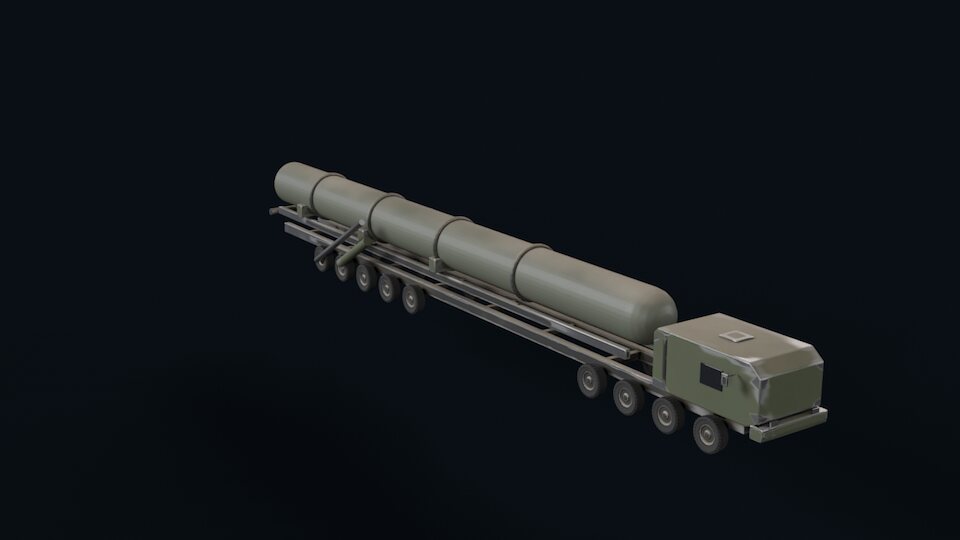
North Korea · Intercontinental ballistic missile
Hwasong-18
| Fuel | Solid: no refuelling before launch |
|---|---|
| Stated range | More than 15,000 km |
| Payload | One warhead, weight unknown |
| How many | “10 or fewer” ICBMs deployed, by a US intelligence estimate |
| Flight in the film | 9,493 km in 32 min 41 s |
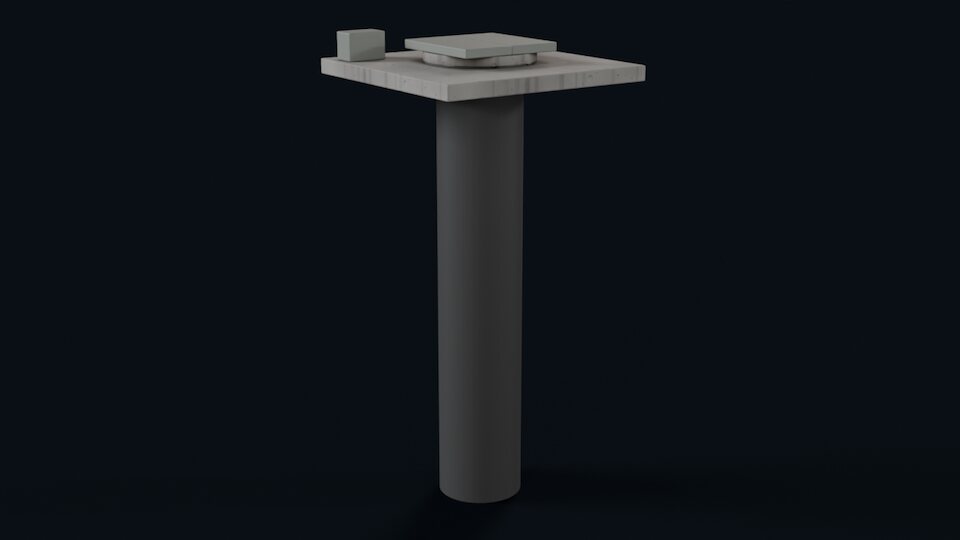
United States · Homeland missile defence
Ground-Based Interceptor
| Emplaced | 44 |
|---|---|
| Where | 40 in Alaska, 4 in California |
| Test record to December 2018 | 10 intercepts in 18 attempts since 1999 |
| March 2019 | An intercept, by a two-interceptor salvo |
| December 2023 | An intercept |
| Per warhead | Probably 3 to 4, one analyst says |
| Each shot’s chance in the film | 60 in 100 |
| In the film | 20 fired, 3 hit |
Tests are scripted, one target at a time.
Everything on the Ground-Based Interceptor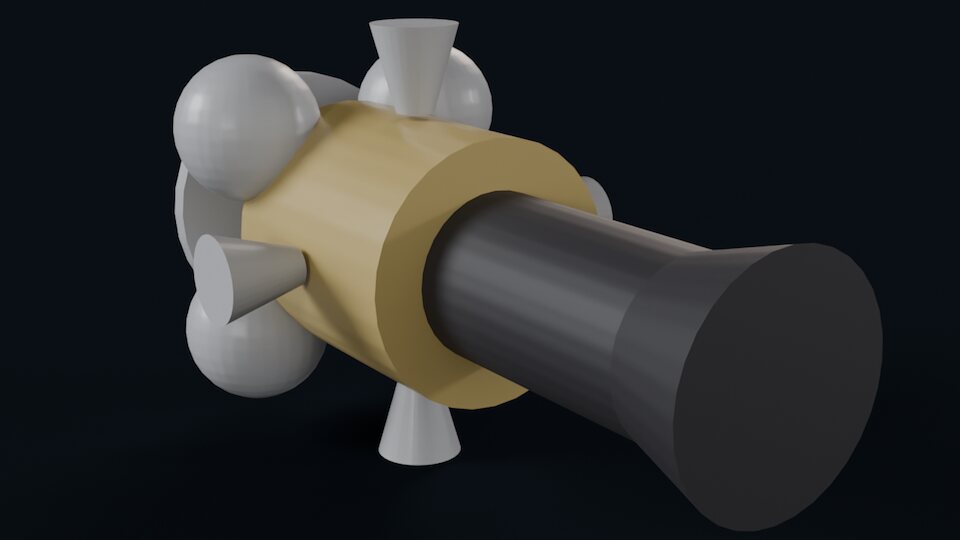
United States · What the interceptor carries
The kill vehicle
| Warhead | None: the force of the collision destroys the target |
|---|---|
| Second look | 90 s to judge a miss |
| Lowest meeting | 150 km up |
Sources
Check us.
- 1
Published estimateMissile Defense Project, Hwasong-18
Center for Strategic and International Studies, 13 January 2026
The missile: solid fuel, stated range, unknown payload
Read 26 November 2026
- 2
Secondary sourceVann H. Van Diepen, Does North Korea really have so few ICBMs? (on the Defense Intelligence Agency’s “10 or fewer”)
38 North, July 2025
A US intelligence estimate: “10 or fewer” ICBMs
Read 26 November 2026
- 3
Primary sourceMissile Defense Agency, Ground-based Midcourse Defense
US Department of Defense, 2025
44 interceptors emplaced; the kill vehicle hits, it does not explode
Read 26 November 2026
- 4
Primary sourceMissile Defense Agency, Ballistic Missile Defense Intercept Flight Test Record (as of December 2018)
US Department of Defense, 17 January 2019
The agency’s test record to 2018: 10 intercepts in 18 attempts
Read 26 November 2026
- 5
Primary sourceMissile Defense Agency, U.S. Missile Defense Agency and U.S. Air Force test (FTG-11): the first two-interceptor salvo
US Department of Defense, 25 March 2019
The 2019 test: an intercept
Read 26 November 2026
- 6
Primary sourceMissile Defense Agency, Missile Defense Agency conducts successful intercept test (FTG-12)
US Department of Defense, 11 December 2023
The 2023 test: an intercept
Read 26 November 2026
- 7
Secondary sourceCenter for Arms Control and Non-Proliferation, Fact sheet: U.S. ballistic missile defense
Center for Arms Control and Non-Proliferation, 2025
40 interceptors in Alaska, 4 in California
Read 26 November 2026
- 8
Secondary sourceAnkit Panda, interviewed by Radio Free Asia, Interview on North Korea’s nuclear capabilities
Radio Free Asia, 3 March 2025
“Probably … 3 to 4 interceptors” for each warhead
Read 26 November 2026
- 9
Primary sourceVipin Narang, Why Kim Jong Un wouldn’t be irrational to use a nuclear bomb first (Washington Post, reprinted)
Carnegie Endowment for International Peace, 8 September 2017
Why cities were expected to be held back as a threat
Read 26 November 2026
- 10
US Department of Defense, 10 January 2025
The promise: “the end of that regime”
Read 26 November 2026
- 11
Primary sourceSamuel Glasstone and Philip J. Dolan, The Effects of Nuclear Weapons, third edition
US Department of Defense and Department of Energy, 1977
Blast and heat from an air burst
Read 26 November 2026
- 12
Primary sourceSamuel Glasstone and Philip J. Dolan, The Effects of Nuclear Weapons, chapter 7: Thermal radiation and its effects
US Department of Defense and Department of Energy, 1977
What catches fire, and at what heat
Read 26 November 2026
- 13
Primary sourceUS Congress, Office of Technology Assessment, The Effects of Nuclear War (Figure 1: vulnerability of population)
US Government Printing Office, May 1979
The rates at which people are killed and injured
Read 26 November 2026
- 14
Real dataEuropean Commission, Joint Research Centre, GHS-POP R2023A: global human settlement population grid
Copernicus Emergency Management Service, 2023
Who lives inside each ring
Read 26 November 2026
- 15
Real dataUS Census Bureau, LEHD Origin-Destination Employment Statistics (LODES)
US Census Bureau, 2025
Who works inside each ring
Read 26 November 2026
- 16
Real dataLos Angeles County Department of Health Services, Reference No. 1138.2: burn resources
County of Los Angeles, 1 July 2017
62 burn beds in the county, 20 at LAC+USC
Read 26 November 2026
- 17
Real historyLos Angeles Times, The end of monthly air-raid siren tests
Los Angeles Times, 30 January 1985
The air-raid sirens fall silent
Read 26 November 2026
- 18
County of Los Angeles, 10 January 2025
The false alert sent to nearly 10 million residents
Read 26 November 2026
- 19
Primary sourceFederal Emergency Management Agency, Radiation emergencies (nuclear explosion): get inside, stay inside, stay tuned
Ready.gov, 2026
“Get inside, stay inside and stay tuned”
Read 26 November 2026
Real: the missiles, the interceptors and their record, the sirens that no longer sound, the sixty-two beds, and the promise.
The threat was never that North Korea could hit Los Angeles. It was that nobody would believe it would.